

Use Prompt Explorer to Understand What People Are Really Asking AI
As more users turn to AI platforms like ChatGPT, Claude, and Perplexity to get answers, traditional keyword research no longer tells the full story. The way people ask questions is changing, and with it, the way visibility is earned. Prompt Explorer is designed to help you track this shift.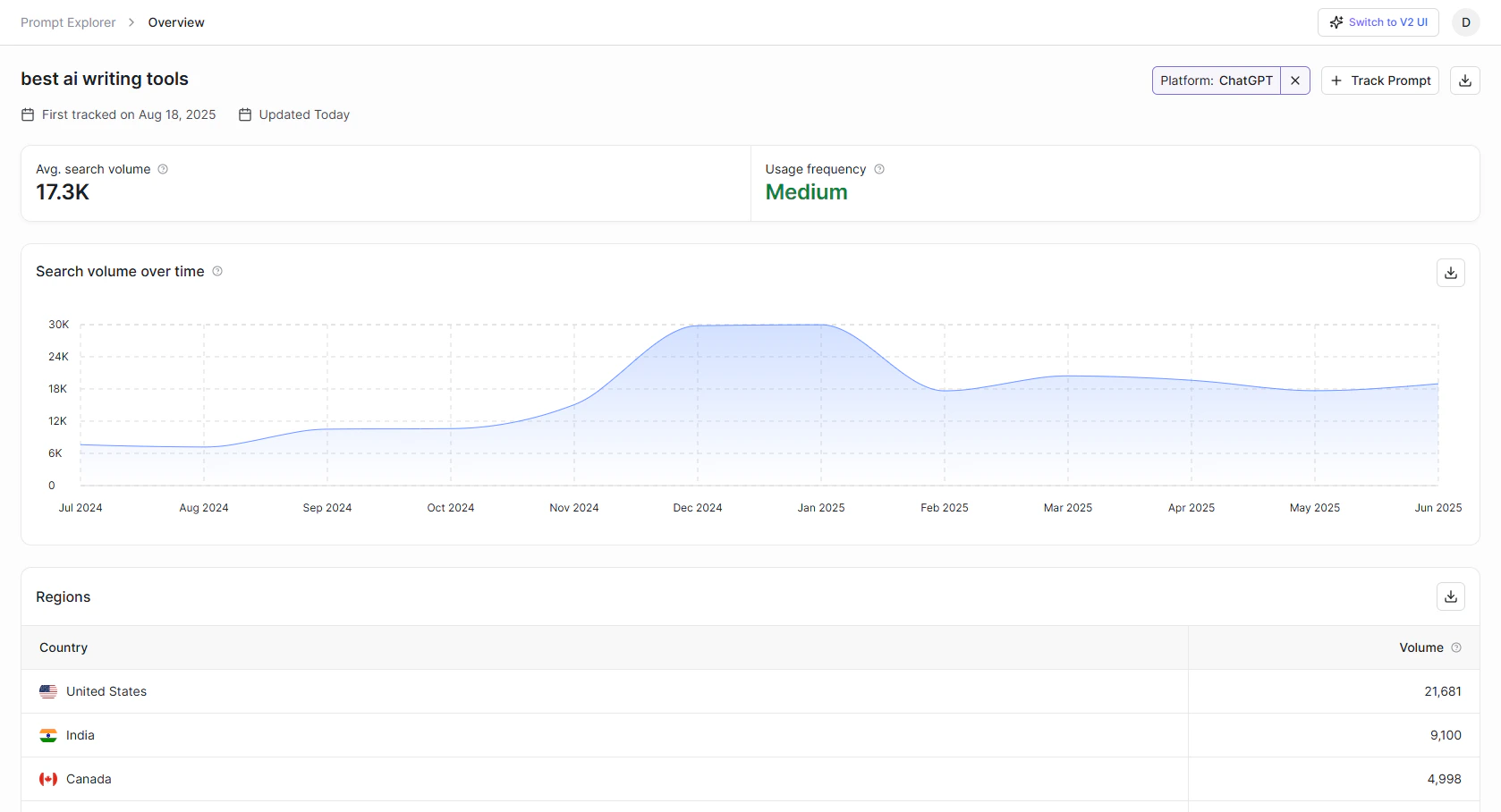
Explore AI Search Volume in Prompt Explorer
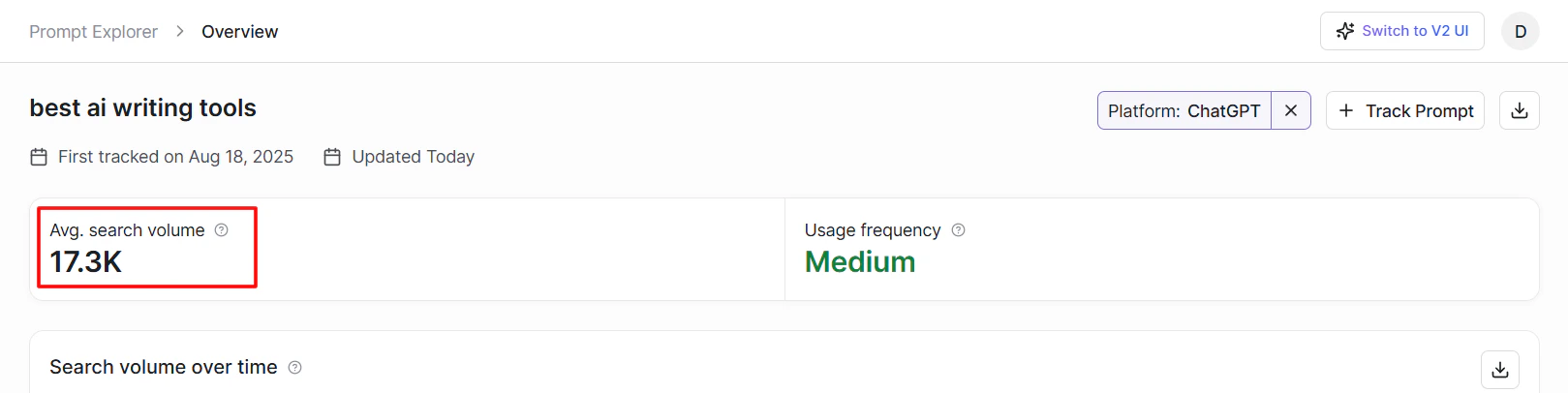
Prompt Explorer gives you access to a metric you won’t find anywhere else: AI Search Volume. Start by opening the Prompt Explorer tool and typing in the prompt you want to search. Say “best AI writing tools.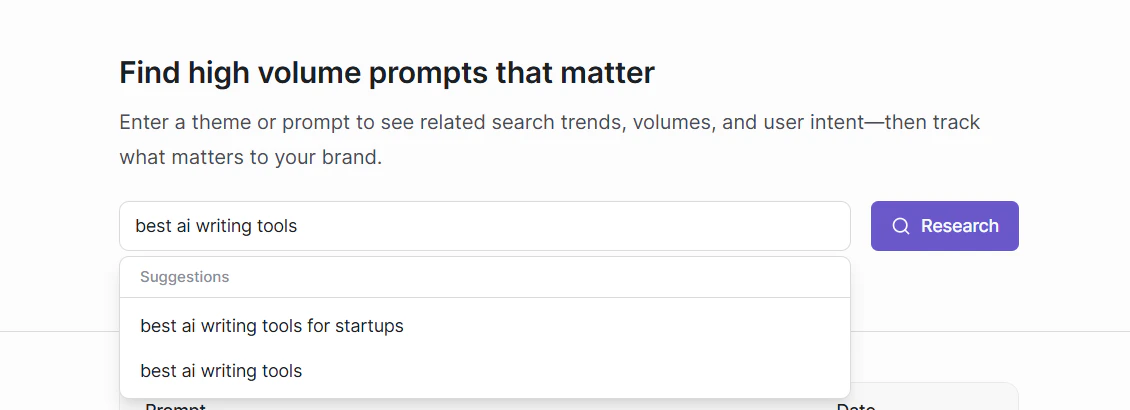
Why Keyword Volume Doesn’t Work for AI Search
Most tools assume that if a keyword has high search volume in Google, it must also be popular in AI. That assumption can be misleading. People interact with AI very differently than they do with search engines. Instead of typing short terms like “best marketing software” or “graphic design tools,” they phrase full, detailed prompts like:- “What’s a good marketing tool for launching an email campaign on a tight budget?”
- “Suggest an easy design platform for creating event posters and social media content.”
- “Can you recommend a simple CRM for handling client leads in a real estate business?”
- They miss high-intent queries that people ask AI every day.
- They split demand across dozens of variations, making each one look insignificant.
- They mislead your content strategy by showing you what people type into browsers — not what they say to chatbots.
How We Calculate AI Search Volume Accurately
Unlike keyword tools that rely on browser-based data, Prompt Explorer estimates AI Search Volume using a multi-source ensemble system built specifically for generative search. Here’s how it works behind the scenes:1. We source real signals from across the web
Our model draws from multiple independent inputs, including:- 120M+ AI conversations from users across platforms
- Public forums like Reddit, Quora, and Stack Overflow
- Enterprise partner data and industry-specific usage trends
2. We identify prompt intent across variations
People rarely ask the same prompt the same way. That’s why we group and normalize prompts based on semantic intent, not just exact keywords. For example, if someone searches:- “Which tool is best for managing remote teams?”
- “Need a project management platform for a distributed agency”
- “Suggestions for software to coordinate tasks in a remote company”
3. We adjust for bias and platform noise
Not all trends are real trends. Sometimes a prompt spikes due to news, social virality, or platform-specific quirks. Our model applies correction factors to adjust for:- Sudden one-time surges
- Overrepresentation from niche forums
- Underreporting due to new prompt formats
What Else Does Prompt Explorer Tell You
Beyond average monthly search volume, Prompt Explorer includes additional insights that help you understand how interest in a prompt is trending — and where demand is coming from. Here’s how to read the rest of the report:Usage Frequency
Right next to Average Search Volume, you’ll see the Usage Frequency. This gives you a quick signal of how frequently people ask a specific prompt across AI platforms based on 12 months of known data.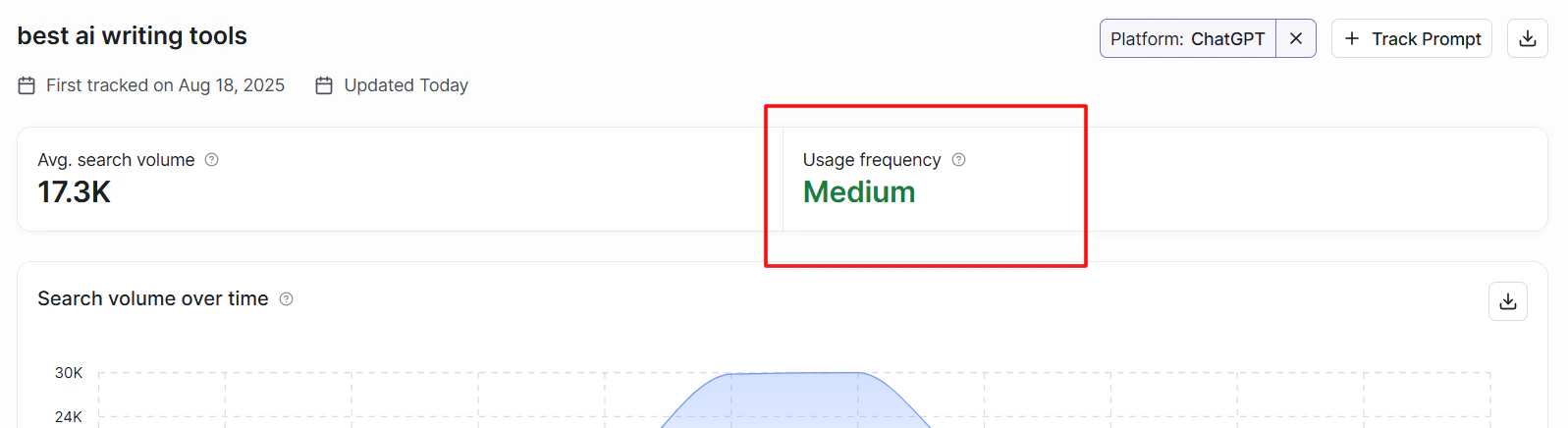
- High: Very popular. These prompts are widely used and great candidates to target for maximum visibility.
- Medium: Moderately popular. These still offer solid traffic opportunities and may be less competitive than high-frequency prompts.
- Low: Niche or emerging. These prompts may have limited reach, but can work well if you’re targeting a specific audience or filling gaps.
Search Volume Over Time
Below the average search volume, you’ll find a chart that shows how demand for the prompt has changed over the last 12 months.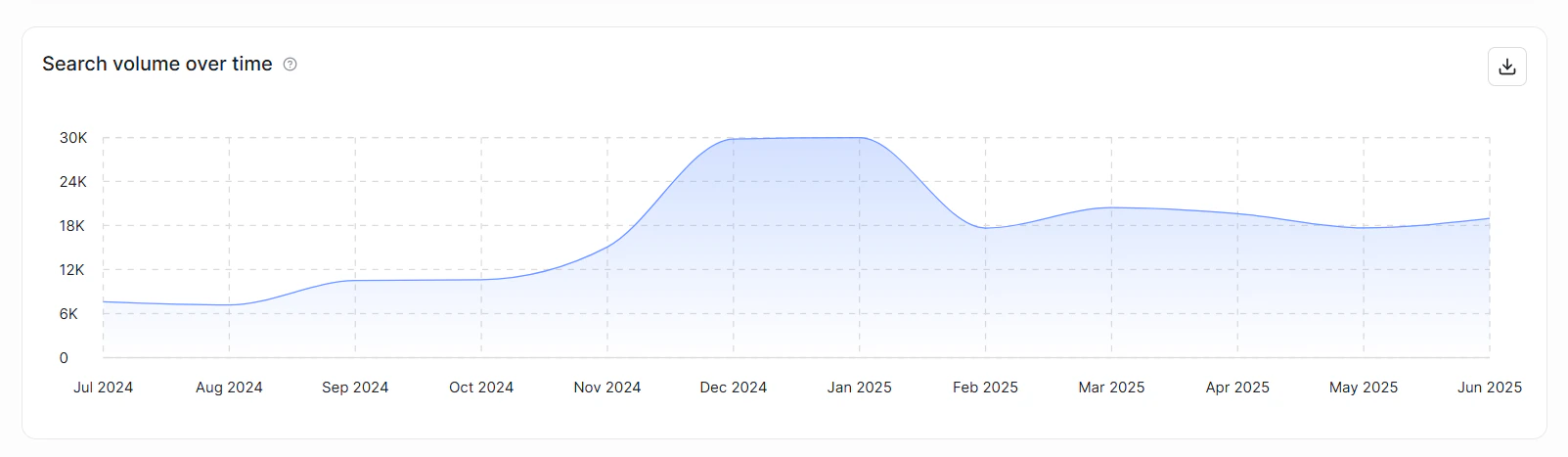
- Gaining popularity month-over-month
- Seasonally spiking (like in December and January here)
- Losing traction or plateauing
Regions
Below the chart, Prompt Explorer shows a country-wise breakdown of where the prompt is most active. This lets you localize your strategy based on where the question is being asked.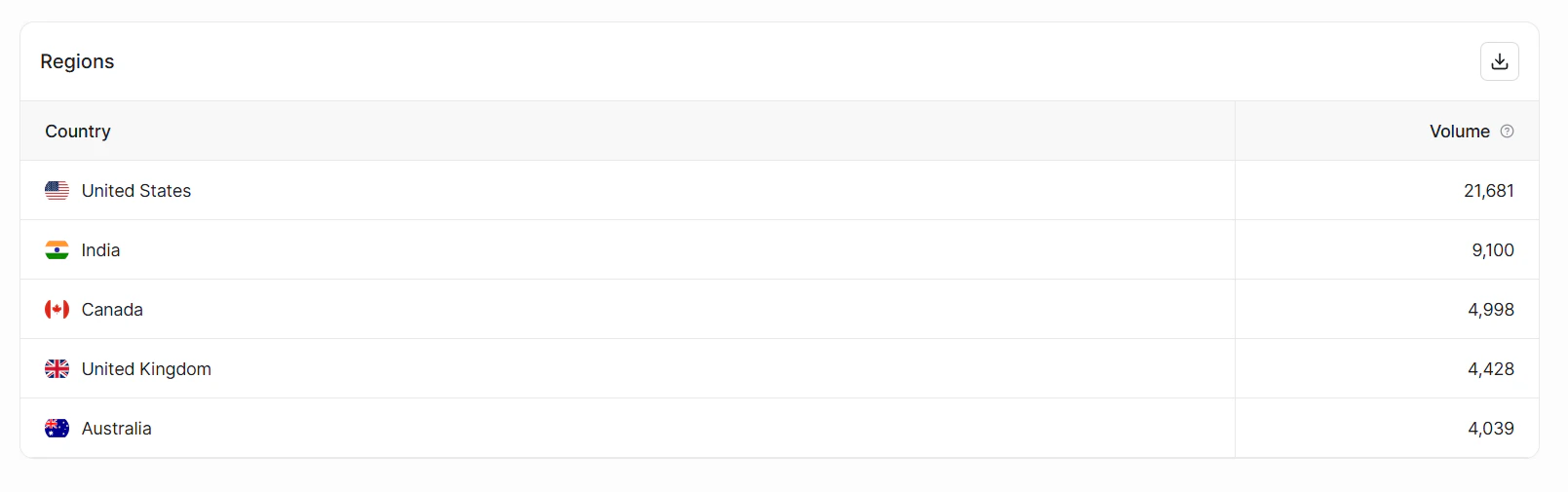
- Prioritize markets where AI search behavior is strongest
- Spot untapped regions where your brand isn’t visible yet
- Adjust language and examples in your content by region
Content Optimization Portfolio