


Core Terms: From SEO to AI Search
Traditional SEO has keywords, rankings, and SERPs. AI search has its own vocabulary. Let’s translate what these terms mean and why they matter for your strategy.Additional AI Search Terms
Answers Mentioned The total count of AI answers where your brand appears. Different from visibility percentage - this is the raw number. Answer Variations When the same prompt gives different answers across platforms or time. Normal volatility can be 30%+ daily. Query Fan-Out (Google AI only) When one search becomes 20+ sub-queries behind the scenes. Mention Sentiment Whether AI describes your brand positively, negatively, or neutrally in its answer. Source Type Classification of citing domains:- Your brand (your own website’s pages)
- Competitor (direct competitor sites)
- Third party (independent sources)
Key AI Search Metrics Explained
Now let’s understand the numbers that actually matter in AI search.Visibility Score

- Answers where you’re mentioned ÷ Total answers tracked × 100
- Example: Mentioned in 57 out of 100 answers = 57% visibility
- 🟢 Excellent: Above 70%
- 🟡 Good: 40-70%
- 🔴 Needs work: Below 30%
Answers Mentioned
- 354 responses mentioned ÷ 604 total responses = ~57% visibility
Mention Position (Rank Distribution)

Sentiment Score
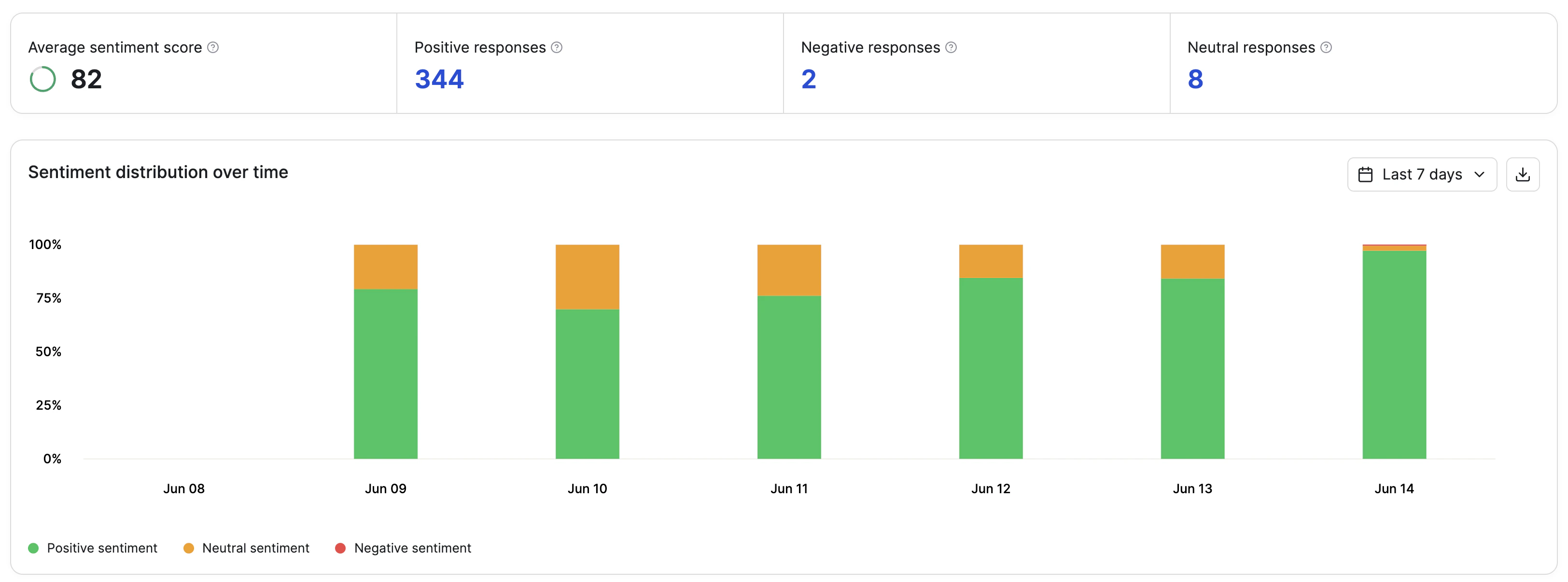
- Positive mentions ÷ Total mentions × 100
- Example: 82 positive out of 100 total = 82% sentiment
- 🟢 Excellent: Above 85
- 🟡 Good: 70-85
- 🔴 Concerning: Below 60
Market Share (Share of Voice)

- Your visibility ÷ Sum of all tracked brand visibility
- In the image above for Canva: 34.2% market share in AI responses
Citation Metrics
Total Citation Pages- All unique URLs cited when your brand/topic is discussed
- Shows the breadth of website sources (domains) AI considers authoritative
- The number of your website/blog pages that AI references
- Unique domains AI references for your topics
- Third-party websites that talk about your brand
- Higher number = stronger authority signal to AI
- This is a traditional SEO metric from Ahrefs
- Shows quality score of your domain (0-100)
- Quality rating of domains citing you (0-100)
- Based on trust, relevance, and freshness of citing domains
Platform-Specific Metrics
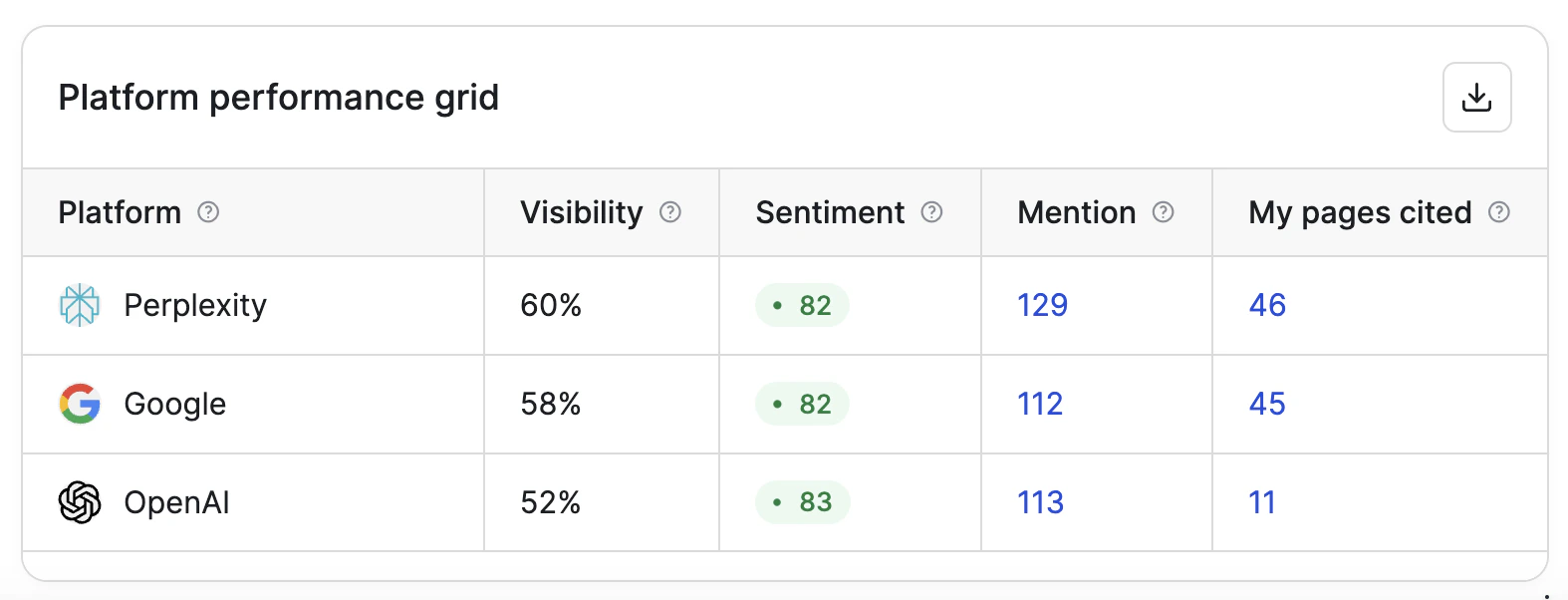
- ChatGPT: 60%
- Perplexity: 45%
- Claude: 52%
- Google AI: 58%
- Index sources
- Ranking algorithms
- Content preferences
- Update frequencies
Metrics That Don’t Matter (Yet)
Some traditional SEO metrics don’t translate to AI search:- Keyword density - AI understands context, not repetition
- Meta descriptions - AI writes its own summaries
- Page speed scores - Important for crawling, not for citations
- Number of pages - Quality over quantity in AI search
What’s Next